
Potrošniki (2026) / The Consumers (2026)
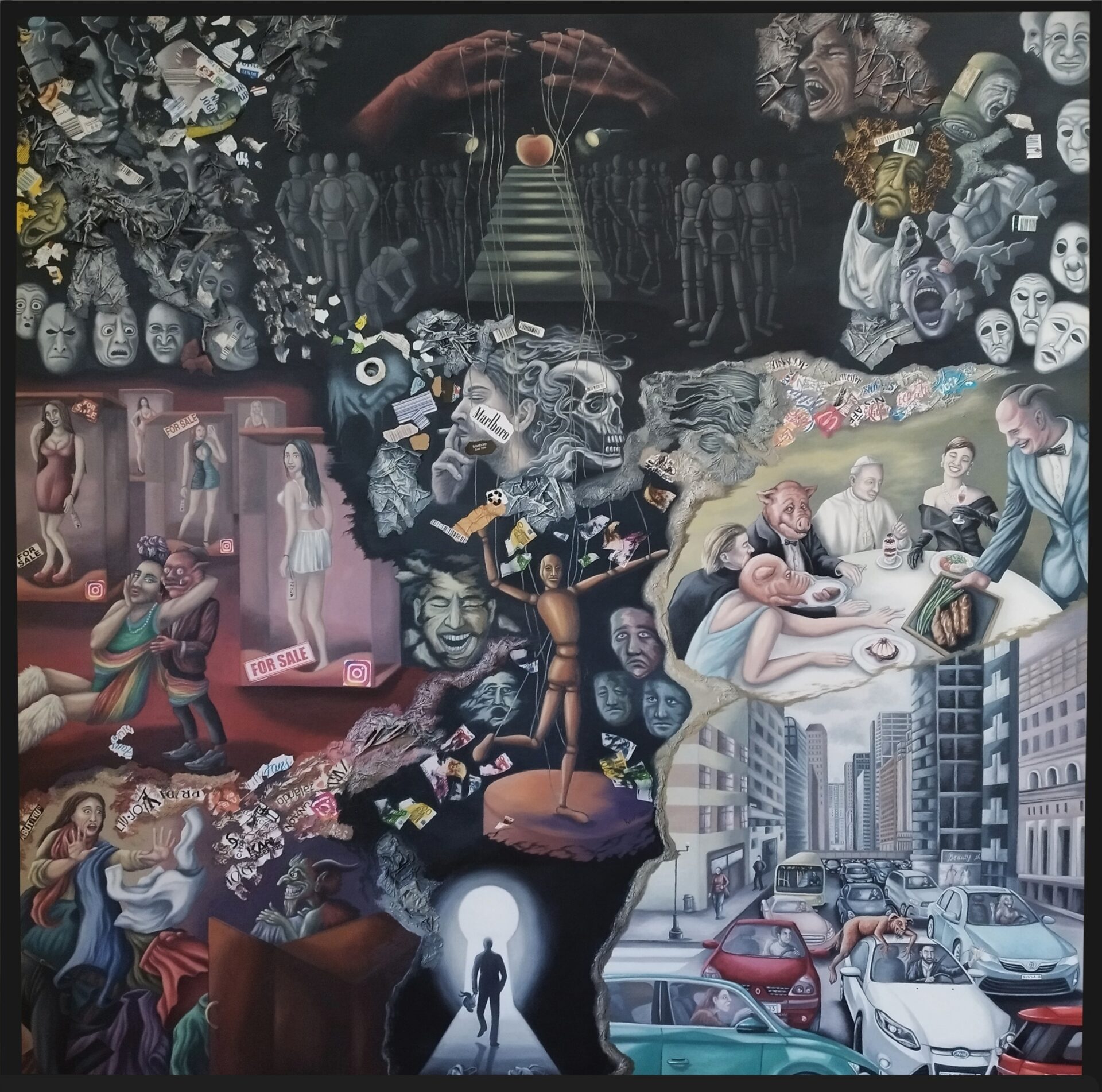
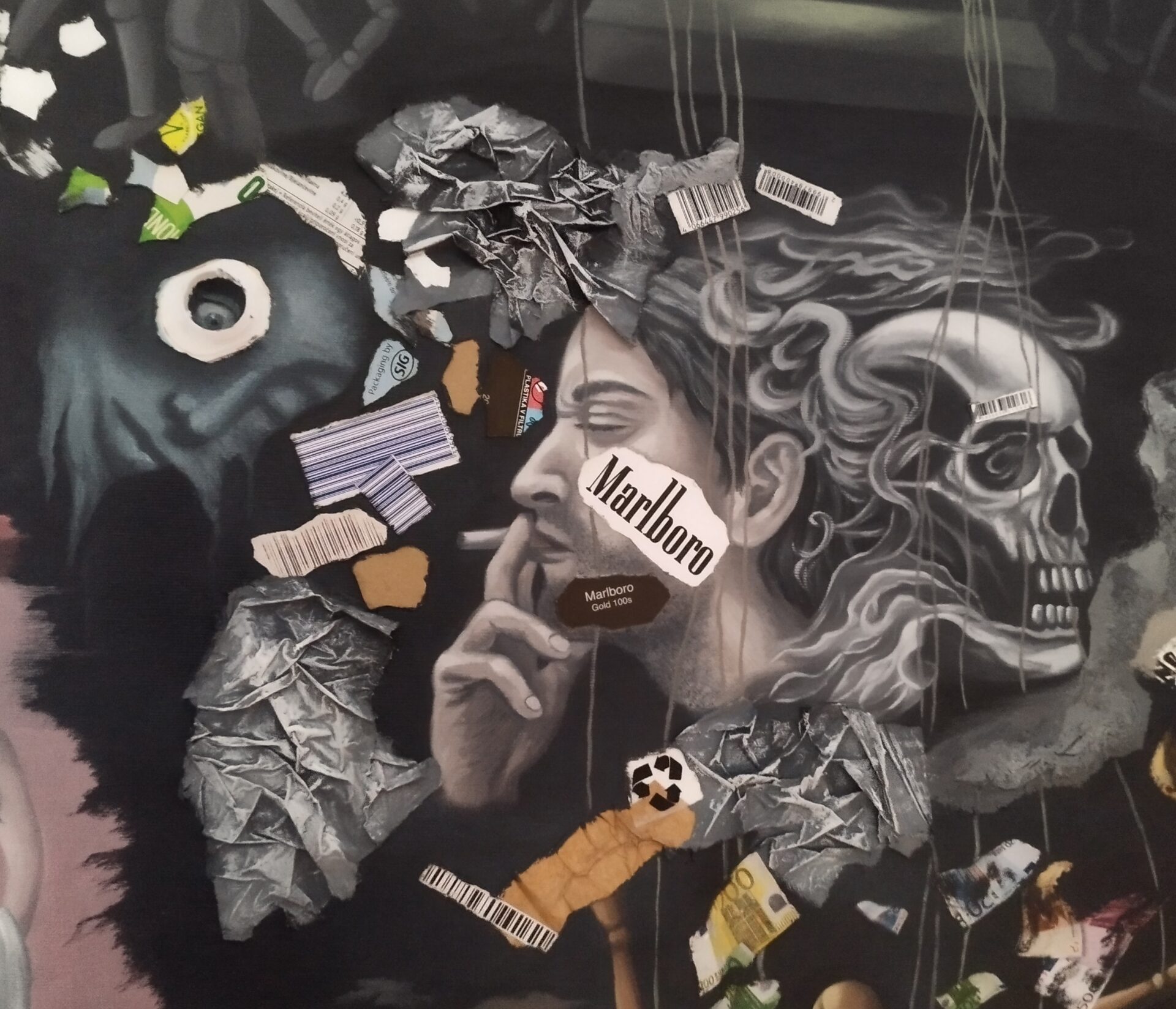
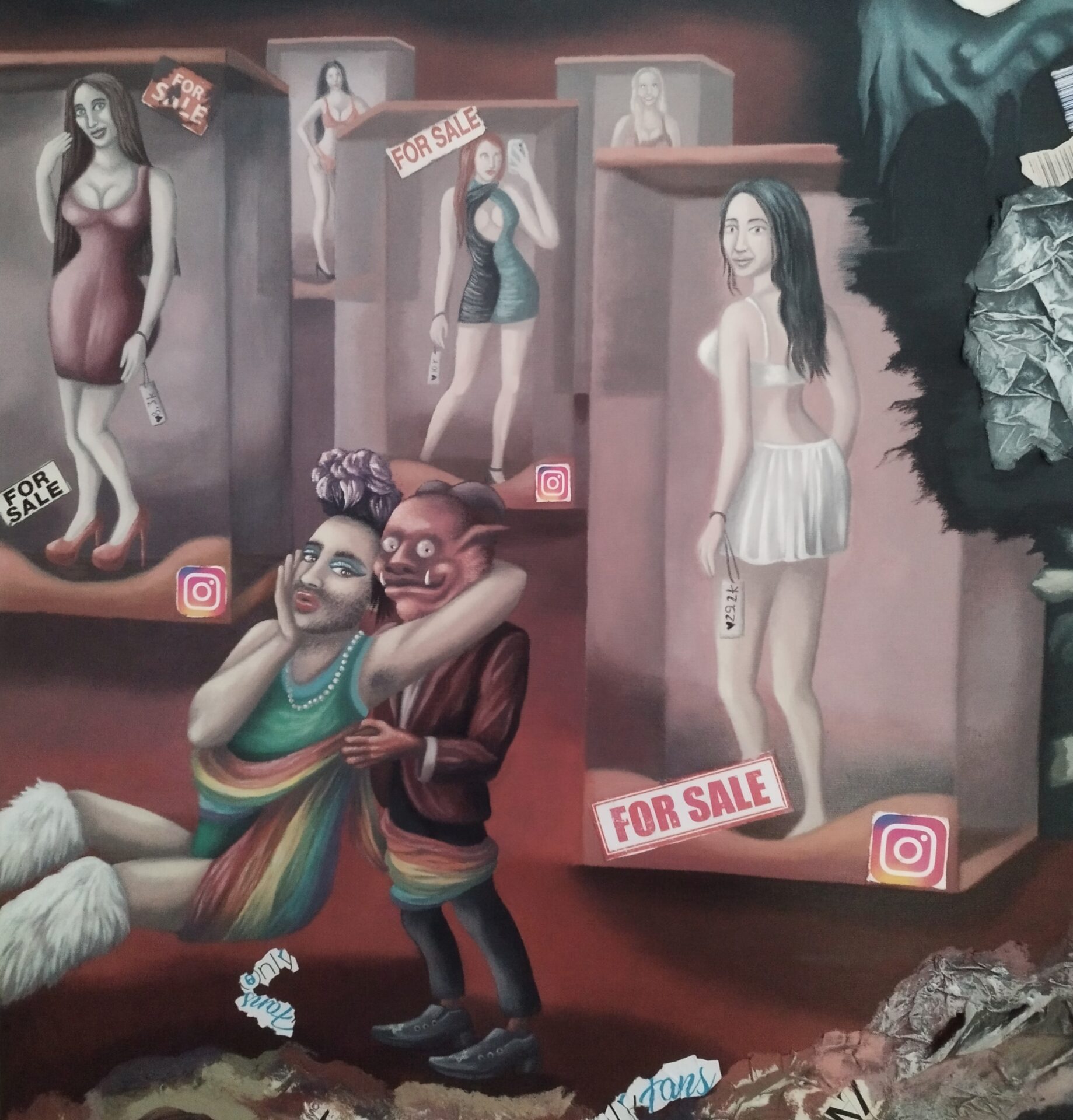
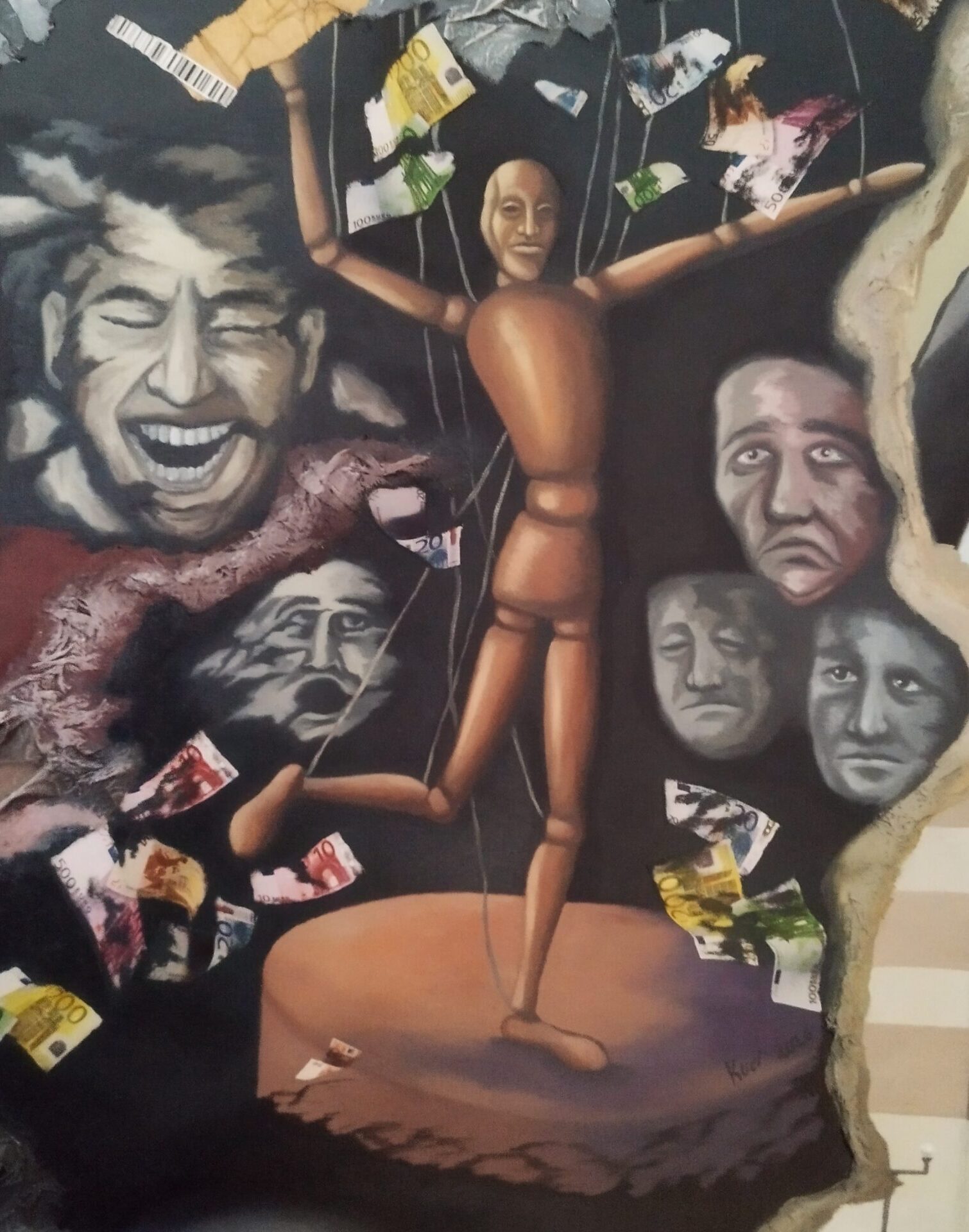
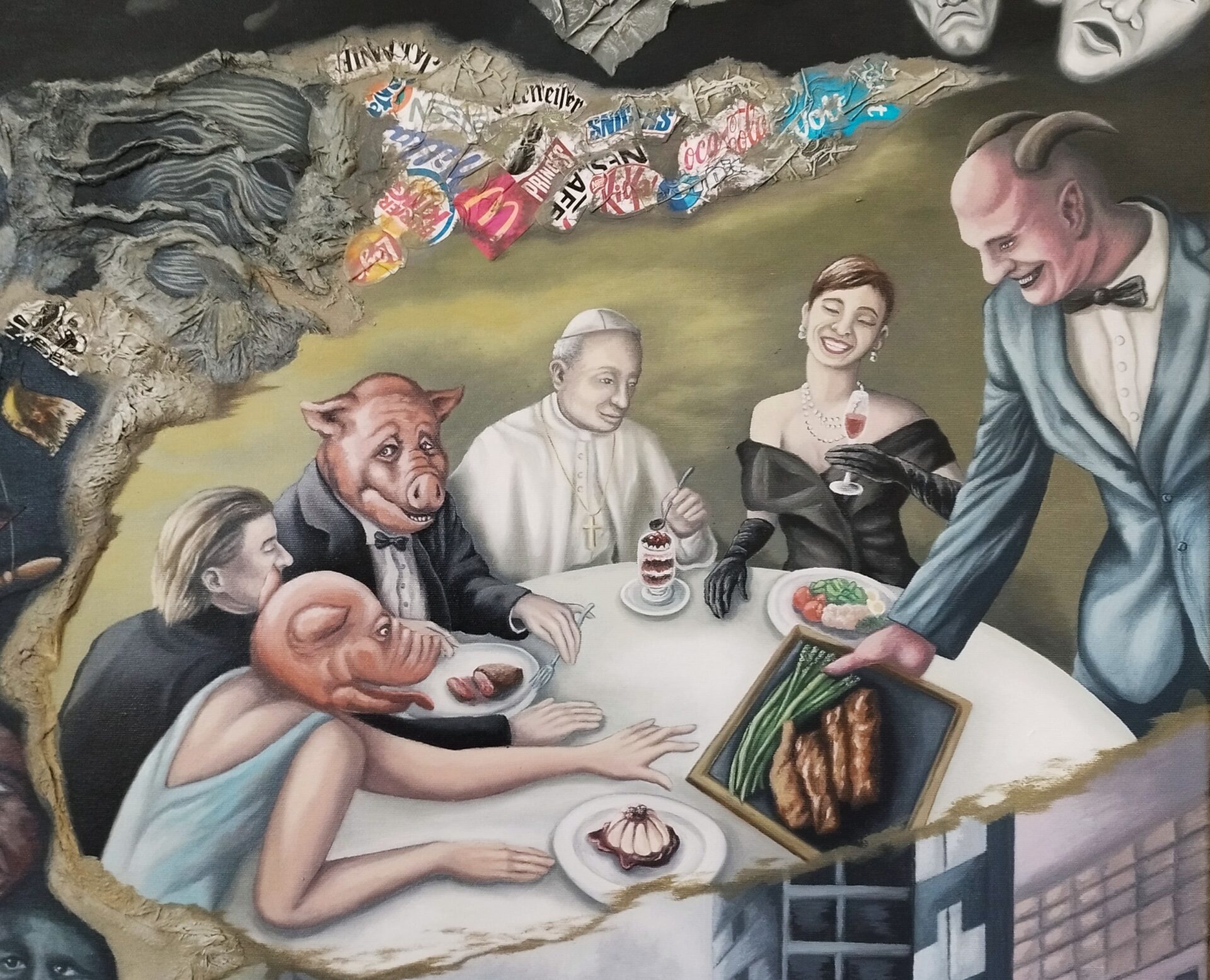
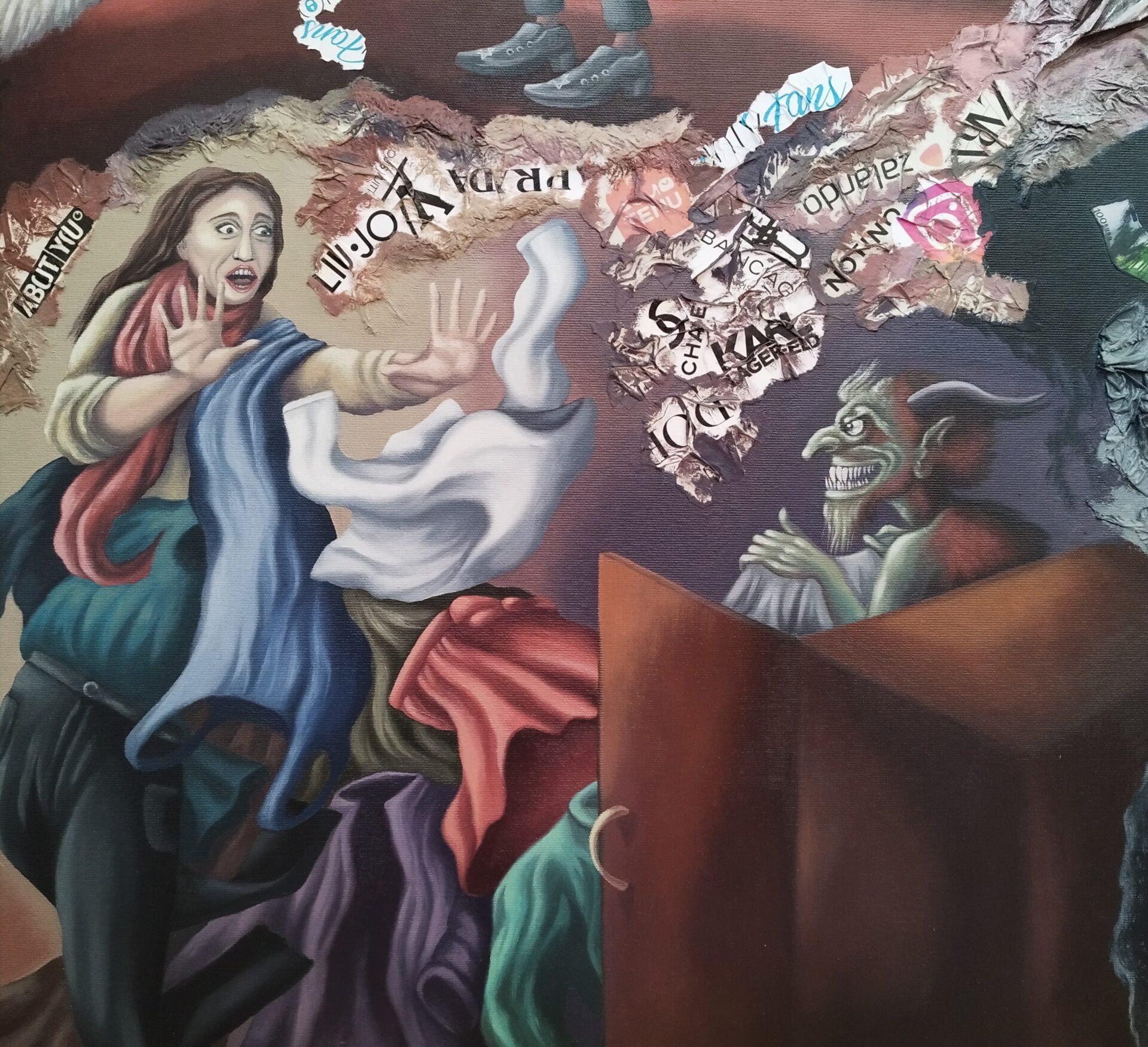
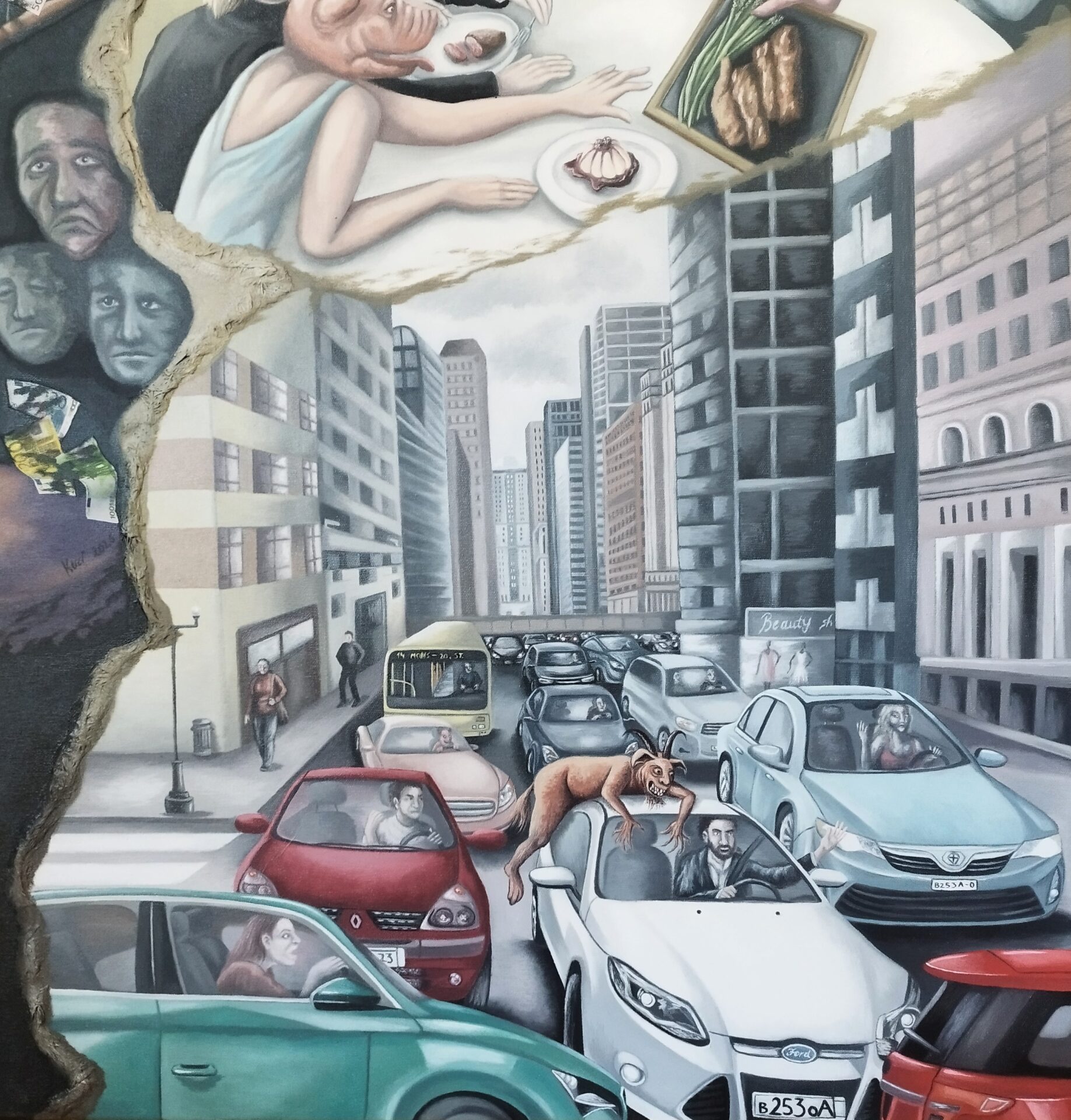
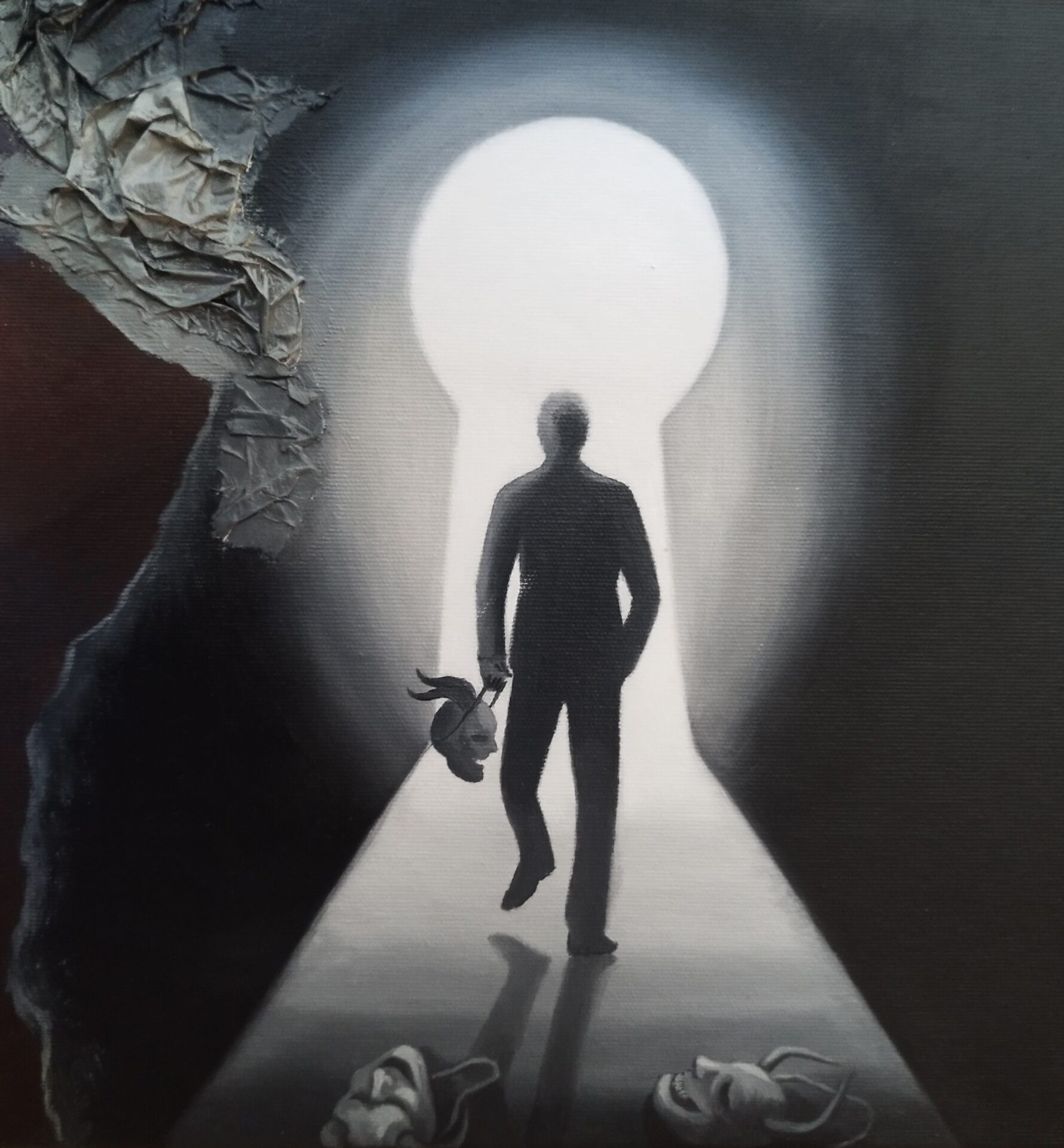
Olje in kolaž iz odpadnih materialov na platnu, 150 x 150 cm
Oil and collage made from waste on canvas, 150 × 150 cm
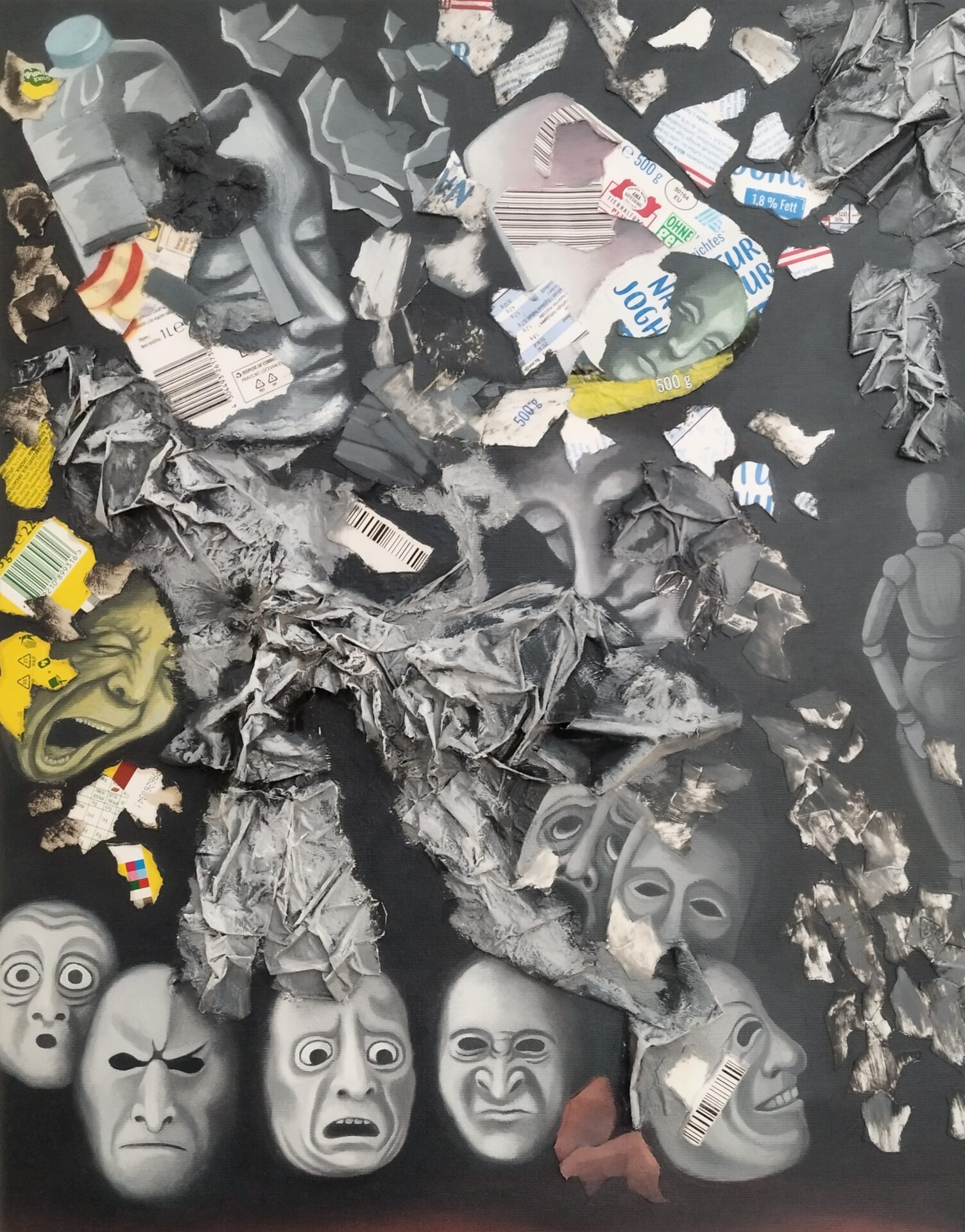
Slika kritično raziskuje odnos do človeka kot bitja, ki v podivjanem postkapitalističnem sistemu išče svoj smisel in mesto ter ponovno išče svojo človeškost. V svetu potrošniške kulture človek postaja podoben eni izmed embalaž izdelkov, ki jo po uporabi in izkoristku njene vsebine zavržemo. Potrošnik troši, da bi na koncu iztrošil samega sebe.
Več kadrov na nekoliko posmehljiv in ciničen način prikazuje tudi dvoumnost in tragičnost postmodernističnega kaosa. Navdih za sliko sem iskala v branju različnih mislecev, piscev in filozofov, med drugim srbskega filozofa Ljubodraga Simonovića ter pisateljice Mirjane Bobić Mojsilović. Ideje za zasnovo posameznih kadrov pa so izhajale predvsem iz opazovanja sveta, v katerem bivam. Moji občutki so se zgostili na velikem platnu, kjer sem s trganjem in razrezovanjem odpadne embalaže podoživljala tesnobo in občutek nezanesljivosti v postmodernistični hiperinformacijski kulturi.
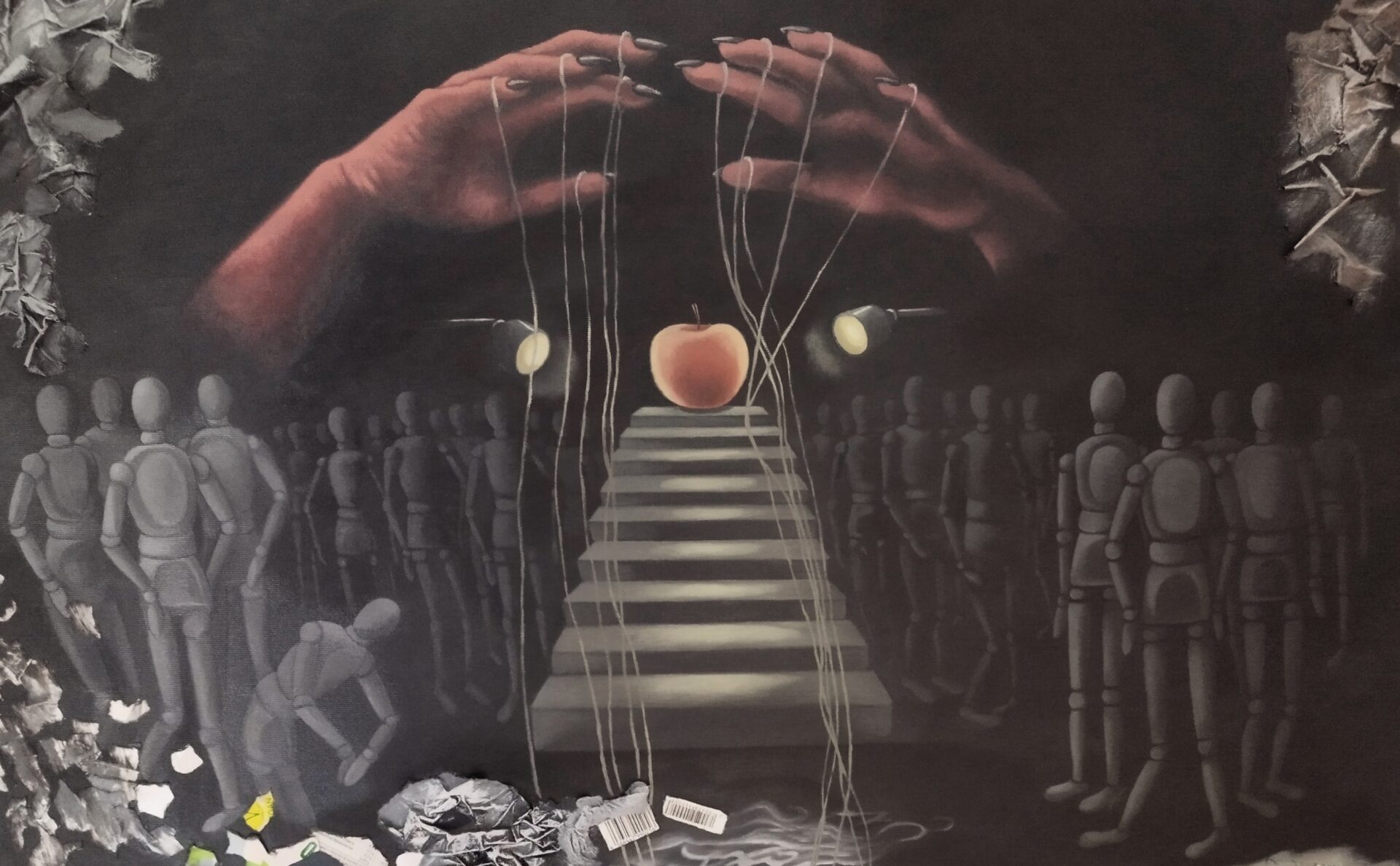
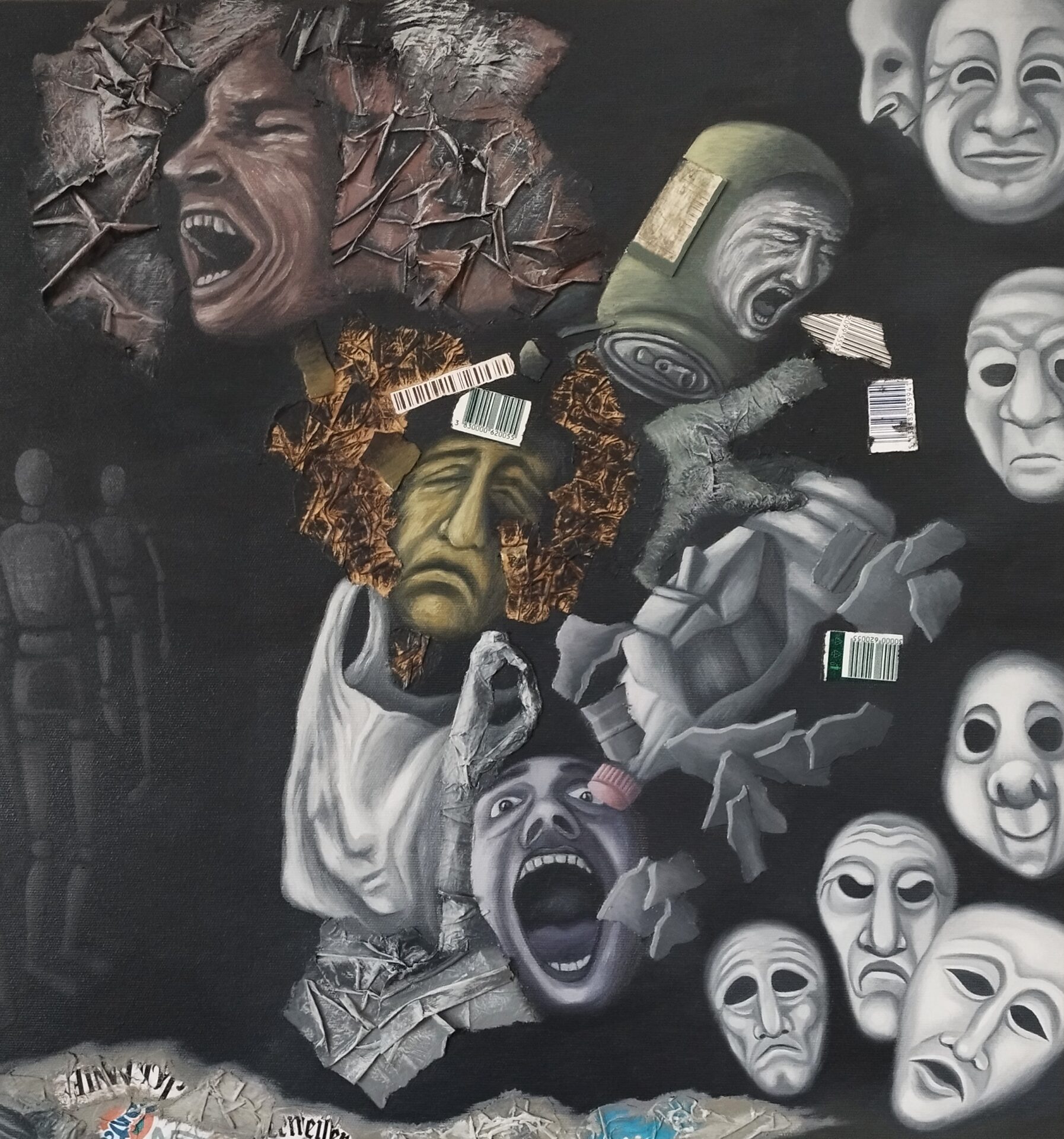
Vsak potrošnik, ujet v odpadke, simbolizira človeka, ki se v tem svetu dostikrat žal ne počuti več kot človek. Marioneta simbolizira ubogljivega posameznika, ki se je sklonil in služi podivjanemu ritmu življenja. Jabolko, postavljeno na vrh stopnišča, je že star biblični simbol človeškega padca in se tukaj znova ponuja kot »rešitev« iz zagate postmodernega človeka.
Nekoliko pesimistična zgodba ima lahko tudi srečen konec: človek odvrže masko demonov potrošništva, ki ga obsedajo, in uzre luč na koncu tunela – kar lepo prikazuje spodnji kader.
The painting critically explores the relationship to the human being as a creature searching for meaning and a place in a frenzied post-capitalist system, searching for its own humanity. In a world of consumer culture, human beings become akin to product packaging, which is discarded once its contents have been used and consumed. The consumer consumes in order to eventually consume oneself.
Several scenes also depict, in a somewhat mocking and cynical manner, the ambiguity and tragedy of postmodern chaos. I sought inspiration for the painting through reading various thinkers, writers, and philosophers, among them the Serbian philosopher Ljubodrag Simonović and the writer Mirjana Bobić Mojsilović, among others. The ideas for the composition of each individual scene, however, also emerged primarily from observing the world in which I live. My feelings condensed onto the large canvas, where, by tearing and cutting discarded packaging, I relived the anxiety and sense of uncertainty characteristic of postmodern hyper-information culture.
Each consumer trapped among the waste symbolizes a human being who, in this world, often no longer feels human. The marionette symbolizes the obedient individual who has bowed down and surrendered to the frenzied rhythm of life. The apple placed at the top of the staircase is an ancient biblical symbol of the Fall of Man, and here it once again presents itself as a “solution” to the predicament of postmodern humanity.
This somewhat pessimistic story can also have a happy ending: when a person casts off the mask of the demons of consumerism that haunt them and glimpses the light at the end of the tunnel — beautifully represented in the lower scene.