
Axis Mundi (2026)
Olje na platnu / Oil on canvas, 170×100 cm
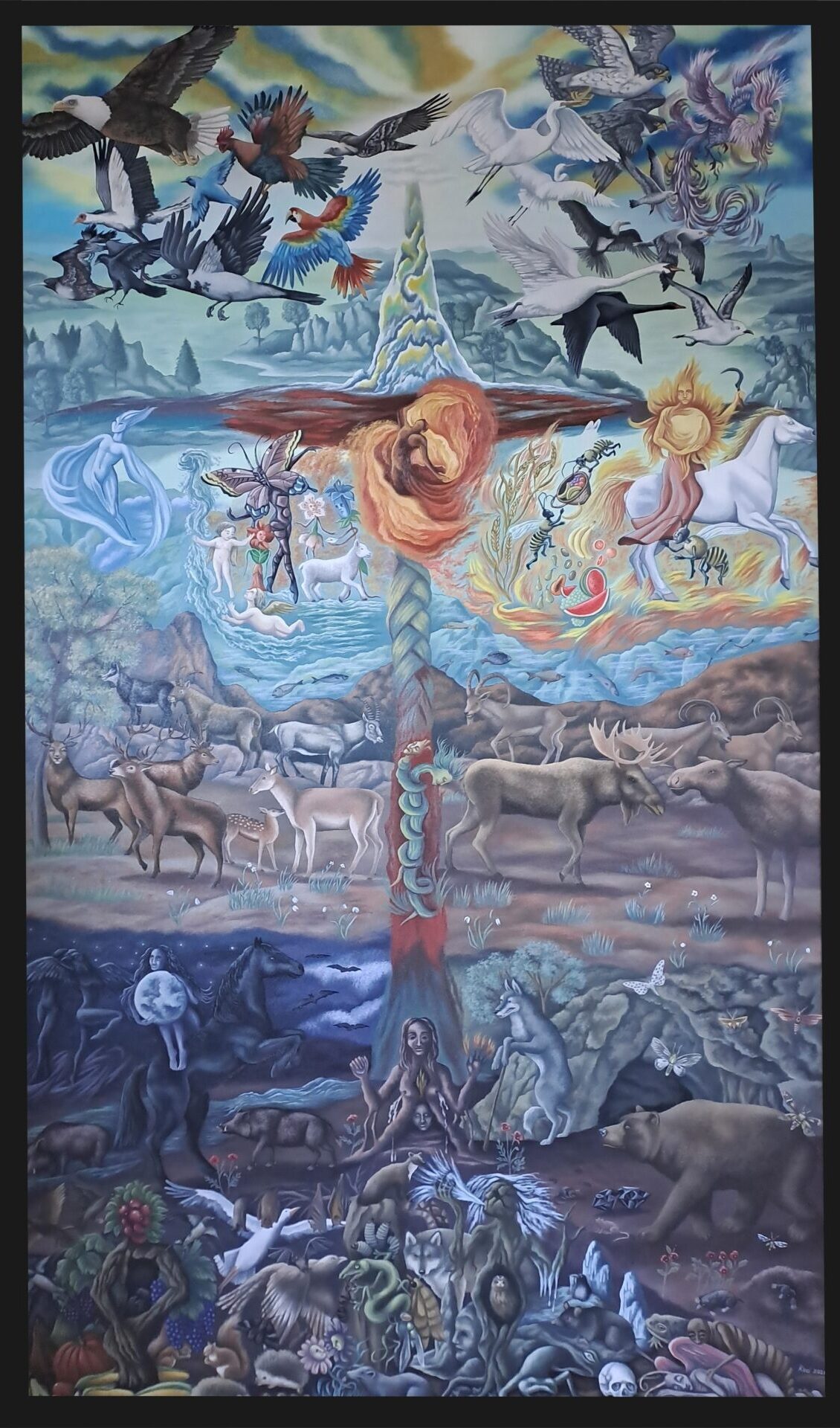
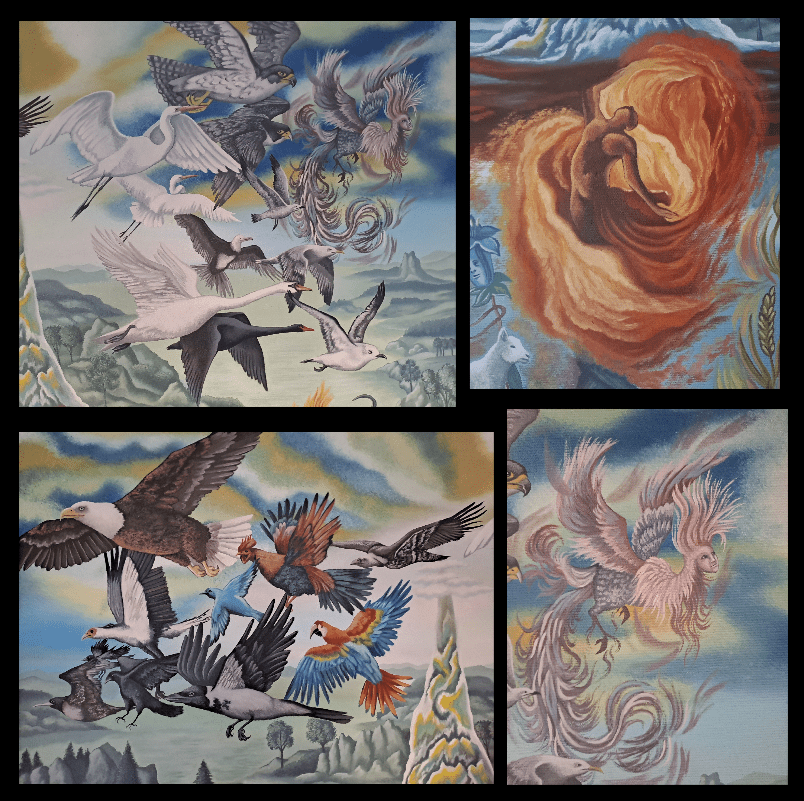
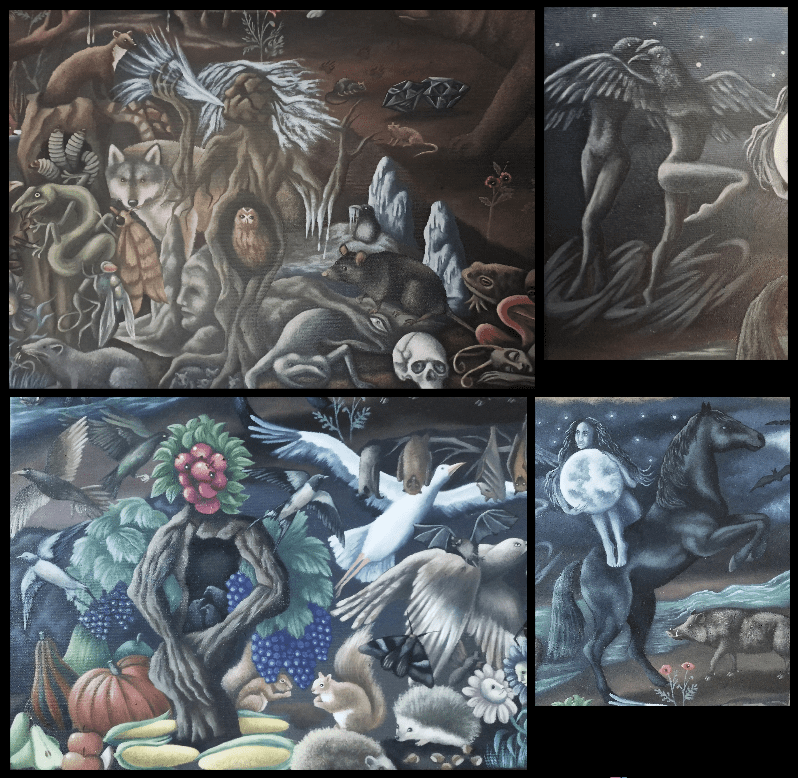
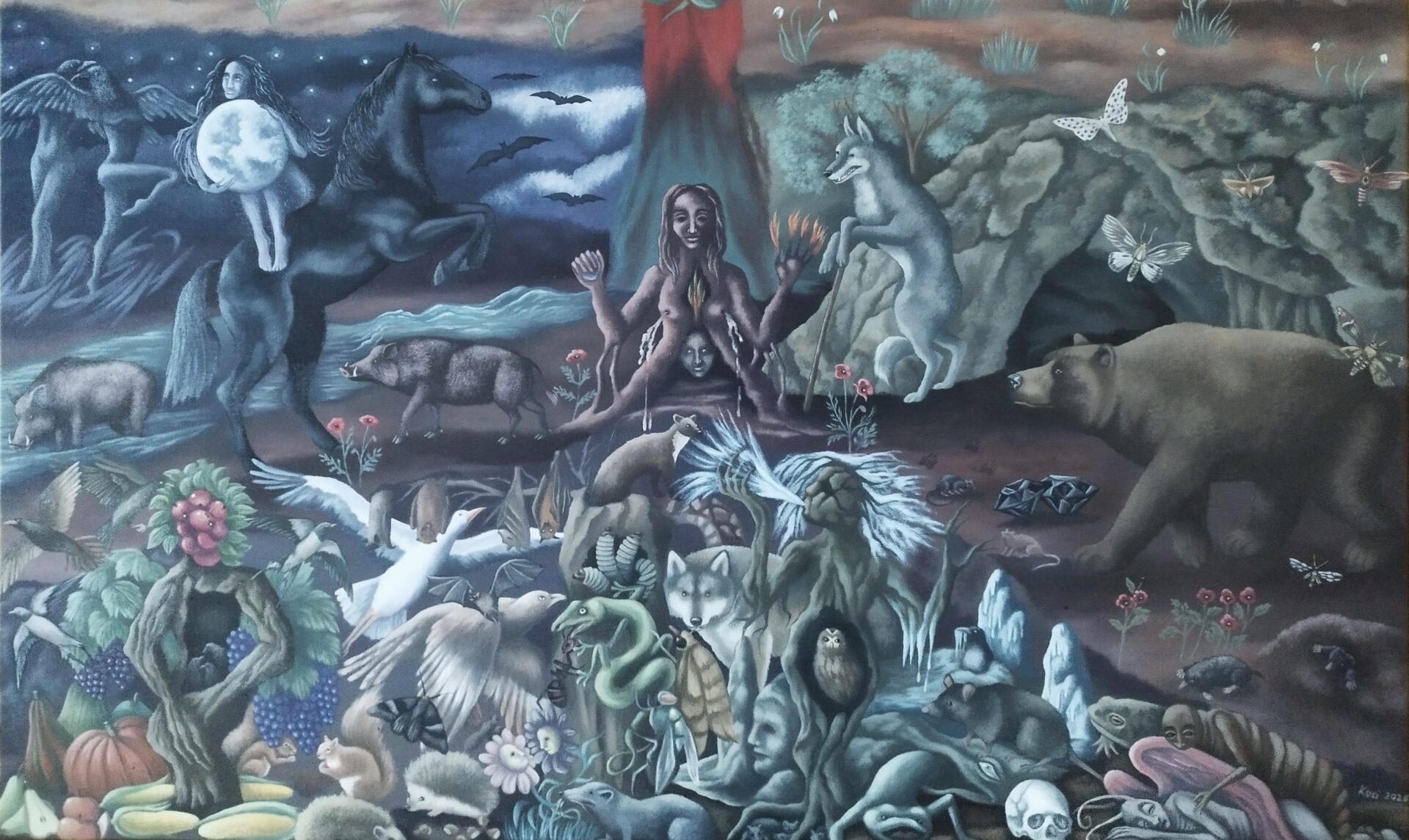
Slika prikazuje os sveta (lat. Axis Mundi). Zgornji del kompozicije je nasičen s simboli, ki predstavljajo transcendentno (ptice, barve: rumena, bela in modra), energijo nasproti materiji, prihodnost nasproti preteklosti ter moško, aktivno načelo.
Os se spušča proti ženskemu načelu, ki ga predstavljajo simboli v spodnjem delu kompozicije. Tu vidimo podzemni svet, plazilce, podgane, krte in temne barve. Podzemlje simbolizira preteklost v nasprotju s sedanjostjo ter pasivnost v nasprotju z aktivnostjo.
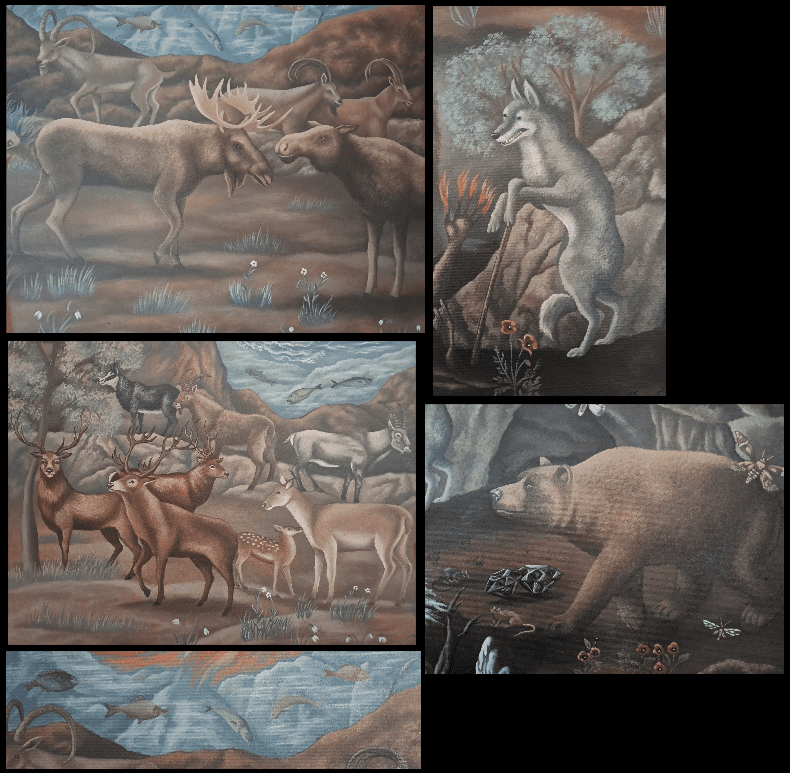
Na sredini je sedanji trenutek, ki ga simbolizirajo kopitarji — jeleni, losi — ter barve: zelena in rdeča. Slika prav tako prikazuje štiri letne čase, ki so upodobljeni z personifikacijami.
Na osi je spletena kita, ki združuje oba principa — ženskega in moškega. Ravnovesje ne nastane z izbiro ene strani, temveč z zavestnim prepletanjem obeh.
Gre za eno silo v dveh fazah: zorenje in izražanje. V tem smislu moški in ženski princip nista spola, temveč univerzalni sili, prisotni v vsakem človeku in v celotnem vesolju.
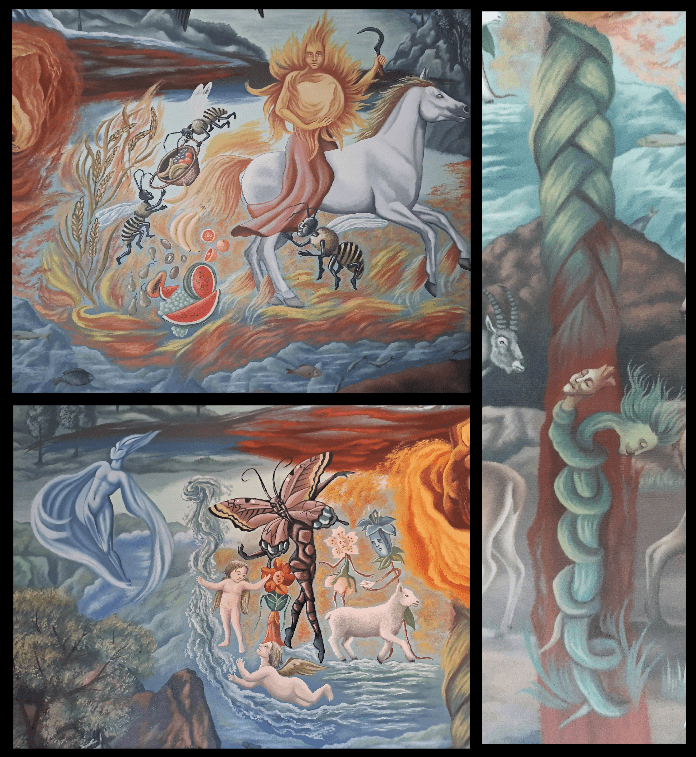
Slika vključuje tudi simbole iz slovanske mitologije, med drugim stvarnika ognja in neba (povezanega z bogom Svarogom), ter boginji Vesno in Morano, ki nastopata kot poosebitvi pomladi in zime.
The painting depicts the axis of the world, known in Latin as Axis Mundi. The upper part of the composition is saturated with symbols representing the transcendent (birds, the colors yellow, white, and blue), energy as opposed to matter, the future as opposed to the past, and the masculine, active principle.
The axis descends toward the feminine principle, represented by the symbols in the lower part of the composition. Here we see the underworld, reptiles, rats, moles, and dark colors. The underworld symbolizes the past in contrast to the present, and passivity in contrast to activity.
In the middle is the present moment, symbolized by hoofed animals—deer, elk—and the colors green and red. The painting also depicts the four seasons, represented through personification.
Along the axis, a braid is woven, uniting both principles—the feminine and the masculine. Balance does not arise from choosing one side, but from the conscious interweaving of both.
It is a single force in two phases: maturation and expression. In this sense, the masculine and feminine principles are not genders, but universal forces present in every human being and throughout the entire universe.
The painting also incorporates symbols from Slavic mythology, including the creator of fire and the sky (associated with the god Svarog), as well as the goddesses Vesna and Morana, who appear as personifications of spring and winter, among others.